Blog » What Are the SPCC Requirements for Data Centers?
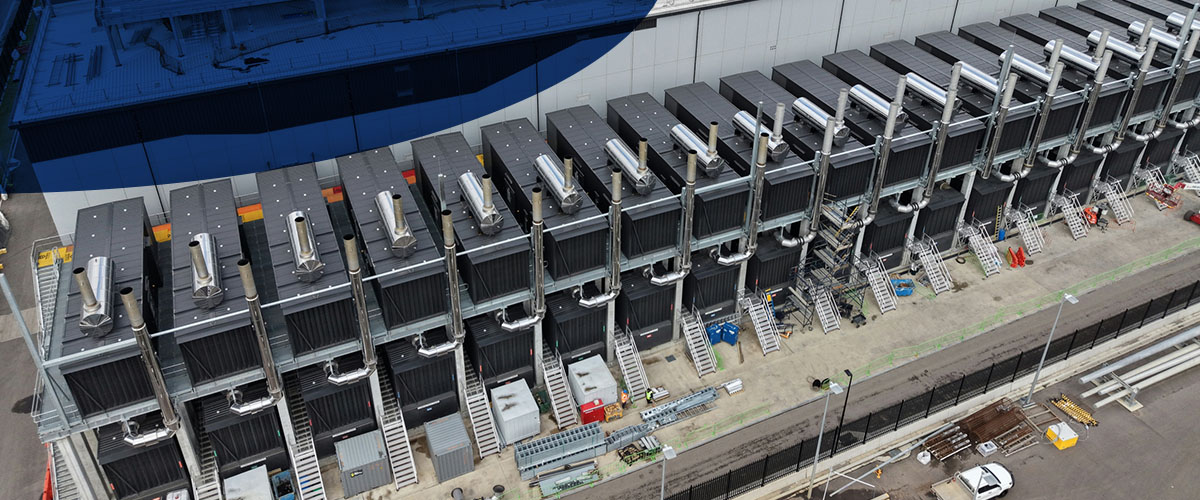
Data centers need an uninterruptible power supply (UPS), but turning to diesel or gasoline generators means many facilities fall under Spill Prevention, Control, and Countermeasure (SPCC) regulations. Facilities with a total aboveground oil storage of over 1,320 gallons need an SPCC plan, and these tanks rarely draw attention until a leak or heavy storm turns that fuel reserve into an environmental liability.
A complete SPCC plan addresses several required components, including facility diagrams and inventories, secondary containment, inspections and testing, employee training and spill response procedures, all aimed at keeping the environment clean while helping generators run reliably.
Understanding these requirements starts with knowing the three conditions that determine whether a facility needs an SPCC plan. If you do, adhering to its key requirements is crucial.
When Does a Data Center Need an SPCC Plan?
A facility must comply with Environmental Protection Agency (EPA) SPCC requirements for data centers if it meets all three conditions under 40 CFR Part 112. This Code of Federal Regulations section governs oil spill prevention.
2. Your Center Meets or Exceeds the Storage Threshold
Data centers with an aggregate aboveground oil storage capacity larger than 1,320 gallons need an SPCC plan. Facilities using buried containers exceeding 42,000 gallons also require a plan, though this threshold rarely applies to data centers.
Storage capacity, not the amount of fuel currently on hand, determines compliance. A 500-gallon generator fuel tank counts as a full 500 gallons toward the threshold even when it’s only half full, since regulators measure what a container can hold rather than its contents.
3. You Can Discharge Oil to Waterways and Shorelines
This condition is based on a facility’s geography. If you are located close to creeks, streams, rivers, lakes and other waterways, or near drainage systems like storm drains, ditches and gullies, you could potentially carry oil offsite.
Regulators assume secondary containment doesn’t exist, so a facility cannot argue the threshold doesn’t apply simply because their containment measures are in place. Most urban and suburban data centers are indeed close to storm sewer systems that tie directly into nearby waterways.
Key SPCC Plan Requirements and Components
SPCC requirements for data centers can be satisfied through various types of SPCC plans. These plans range from self-certified options to those requiring a professional engineer’s signature. Regardless of plan type, 40 CFR Part 112 establishes foundational requirements that every facility that meets the above criteria must address.
Facility Diagram and Inventory
Under 40 CFR Part 112.7, every SPCC plan must include a facility diagram marking the location and contents of the following:
Oil storage containers
Storage areas where mobile or portable containers are located
Transfer stations
Connecting piping
For data centers, this includes generator fuel tanks, transformer locations and any other oil-filled equipment on-site.
Containment must hold the full capacity of the largest container as well as space for precipitation. Data center transformer containment requirements typically extend to diesel generator fuel tanks as well as the transformers themselves.
Secondary containment can be either active or passive in design. Many facilities choose a passive system that relies on gravity rather than mechanical components. These systems operate independently of other site conditions, power availability or staff intervention.
Oil-handling personnel must receive training in the following:
Equipment handling and maintenance
Discharge procedure protocols
Appropriate pollution control laws and regulations
General facility operations
The contents of the SPCC plan
Separately, 40 CFR Part 112.7 requires at least one annual discharge prevention briefing for all oil-handling personnel, highlighting malfunctioning components, known discharges or failures and recently developed precautionary measures.
Spill Response Procedures
Every SPCC plan must include documented spill response procedures covering the following:
What to do if a discharge occurs
Who is responsible for initiating cleanup
What equipment and materials are on-site or contracted for response
How to report to the appropriate authorities
For data centers, this typically means keeping a contracted spill response company on call around the clock.
Where there’s reasonable potential for equipment failure, which applies to virtually all data centers, plans must also predict discharge scenarios, including direction, rate of flow and total quantity for each type of major equipment failure.
Reviewing Your Plan
Amendment triggers under 40 CFR Part 112.5 fall into two categories. First, change-triggered amendments — any material change to facility design, construction, operation or maintenance that affects discharge potential requires an update, including the following:
Commissioning new containers
Replacing containers
Installing new piping
Altering secondary containment
Changing operating procedures
Any of these changes requires a plan amendment within six months, with implementation completed within six months of preparation. A licensed Professional Engineer must certify all amendments, with an exception for qualified facilities under Part 112.6.
Second, regardless of whether changes occurred, SPCC plans require a mandatory five-year review. Facility owners and operators must fully review and evaluate the plan at least once every five years, signing a documented statement confirming the review took place and remains accurate.
Meet SPCC Secondary Containment Requirements With Solidification Products International, Inc.
Meeting SPCC secondary containment requirements takes more than paperwork. It takes hardware that performs reliably on-site, year after year. Solidification Products International, Inc. has spent more than 30 years engineering passive containment systems built specifically for facilities like data centers, where transformer and generator fuel tanks need protection without adding complexity.
The Petro-Barrier™ and Petro-Pipe® systems meet EPA secondary containment standards using a gravity-fed design, with no pumps, sensors or valves to maintain or fail. As an ISO 9001:2015-certified U.S. manufacturer, you can expect outstanding quality and reliable performance.
SPI has also earned 2026 Oil Containment System of the Year honors from Energy Business Review, demonstrating our commitment to excellence. Call 203-484-9494 or contact SPI’s team online to find the right containment solution for your data center.